|
|
|
|
|
|
|
Message from the Executive Director
Dear colleagues and friends,
I am pleased to share our latest edition highlighting the breadth of U.S.-Israel agricultural R&D collaboration. From institutional engagements in Washington to groundbreaking field research, our joint community continues to tackle critical challenges in food security, climate resilience, and resource management. In this issue, we present our 2025 Impact Report, reflecting on our progress across agriculture, food security, and desert farming while setting our strategic outlook for the coming year.
We also highlight key milestone events, including our showcase reception in Washington, D.C., and recent briefing visits with bipartisan delegations of Congressional staffers at BARD. Inside, you will also find details on our open 2026 Pioneer Grants and Fellowship programs, insights from three recent binational workshops, featured research on crop resilience, and spotlight stories on our BARD Graduate Fellows at Purdue and MIT.
Finally, as the Jewish New Year approaches, I would like to take this opportunity to wish our community, partners, and friends worldwide a Shana Tova, a happy, healthy, and prosperous New Year.
Best Regards,
Prof. Yoram Kapulnik
BARD Executive Director
|
|
|
Impact Report 2025:
Research, Partnerships, and Growth
The BARD 2025 Impact Report highlights continued U.S.-Israel collaboration in agricultural research, supporting projects in agriculture, food and nutrition, aquaculture, desert farming, and sustainable production systems. The report also outlines investments in research grants, fellowships, and new pathways that help advance scientific knowledge and practical applications.
|
|
|
|
|
Pioneer Grants
The 2026 Submission BARD will receive applications across all agricultural research areas, including Agricultural Engineering, Animal Health and Production, Aquaculture, Crop Health and Production, Soil and Water Resources, Renewable Resources, Food Products, and Agricultural Economics.
Award duration: up to 3 years
Maximum award: up to $600,000
Submission deadline:September 16, 2026
|
Va’adia-BARD Postdoctoral Fellowship
Designed to identify and support young scientists who will eventually become leaders in agricultural sciences and technologies.
Award duration: 1-2 years
Maximum award: $64,000 including travel expenses.
Next submission date: January 15, 2027
|
|
|
Senior Research Fellowship
The program allows established scientists from the United States to spend time in Israel working with host researchers, gaining exposure to advanced research areas while strengthening scientific cooperation and promoting collaborative agricultural research between the two countries.
Award duration:2-12 months
Maximum award: $3,000 per month plus a onetime allocation of $2,000 for travel
Next submission date: January 15, 2027
|
Graduate Student Fellowship
The program allows Ph.D. students from either the U.S. or Israel to spend time in the other country, gaining hands-on experience and learning new skills and techniques in agricultural, food, and nutrition sciences.
Award duration: 2-6 months
Maximum award: $1,500 per month and $2,000 to cover travel.
Next submission date: January 15, 2027
|
|
|
Workshop Grant
BARD workshops help identify emerging research needs, explore new directions and opportunities in agricultural R&D, and provide insights to inform policy discussions and address contemporary agricultural challenges.
Maximum award: Varies: $20,000 -$45,000
Next submission date: January 15, 2027
|
Seed Grants
This program extends the impact of BARD-supported workshops by funding Seed Grants for early-stage U.S.-Israel research collaborations. The grants help partners build joint projects, generate preliminary data, and prepare competitive full proposals.
Award duration: up to 1 year
Maximum award: $50,000
Next submission date: 3 months following a BARD-supported workshop
|
|
|
|
|
From Lab to Market
BARD Reception Highlights U.S.-Israel
Agricultural Innovation
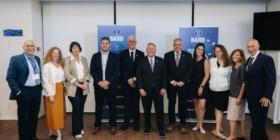
The BARD Reception in Washington, D.C., brought together government representatives, researchers, industry leaders, and board members to discuss the role of U.S.-Israel collaboration in advancing agricultural research. Panel discussions explored innovations in water management, crop improvement, and food production, while emphasizing the connection between research, implementation, and long-term impact. The event also introduced BARD's Food Security Technology Accelerator, a new initiative designed to strengthen collaboration between researchers and industry partners and support the path from research to application.
|
|
|
Congressional Staff Delegations Visit BARD
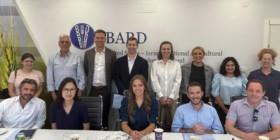
We welcomed two bipartisan delegations of U.S. congressional staffers to BARD to explore the impact of U.S.-Israel agricultural research collaboration. The visit featured BARD-supported projects on wheat breeding and mango cultivation, presentations on the Food Security Accelerator, and BARD's strategic outlook. We thank our guests and speakers for an engaging discussion.
|
|
|
|
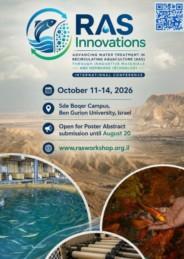
Advancing Water Treatment in Recirculating Aquaculture (RAS)
Join us at RAS Innovations 2026 – a BARD workshop dedicated to the latest advances in innovative materials and membrane technologies for Recirculating Aquaculture Systems (RAS). The workshop will bring together experts from around the world to share cutting-edge research, innovative technologies, and practical solutions for sustainable aquaculture and water treatment.
October 11–14, 2026 Sde Boker Campus, Ben-Gurion University of the Negev, Israel
|
|
|
|
|
AI and Data Tools in Invasion Science
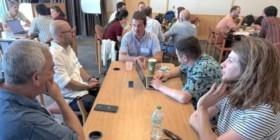
Researchers, practitioners, and industry leaders from six countries and 13 institutions gathered at UC Davis for an international workshop on invasion science and technology. The workshop explored how artificial intelligence, remote sensing, machine learning, and geospatial tools can improve invasive species detection, monitoring, and management.
Discussions focused on data integration, risk assessment, spatio-temporal modeling, and knowledge transfer. Outcomes include a collaborative research agenda and recommendations to guide future research, funding opportunities, and international policy engagement. This workshop was jointly organized by Dr. Ran N. Lati (ARO), Prof. Hanan Eizenberg (ARO), and Dr. Anna Brook (University of Haifa) and Dr. Steven A. Fennimore (UC Davis).
|
|
|
Building Partnerships in Nutrition and Sustainability
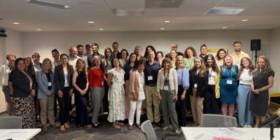
A recent Israel-U.S. workshop brought together approximately 60 researchers, faculty members, and professionals, along with 15 doctoral students, to discuss nutrition, food systems, public health, and environmental sustainability.
The program explored topics including alternative proteins, food security, nutrition policy, and sustainable diets, while highlighting opportunities for future binational collaboration. Participants engaged with representatives from leading universities, U.S. funding agencies, and research organizations, fostering new professional connections, mentorship opportunities, and potential research partnerships.
|
|
|
Exploring Nanobubbles
for Agricultural Water Efficiency
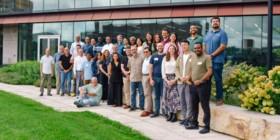
Scientists from the United States and Israel convened at Penn State University to examine the emerging role of nanobubbles in agriculture. The workshop explored how nanobubble technologies may improve water use efficiency, nutrient uptake, soil health, and crop resilience, while identifying critical research gaps and opportunities for future collaboration across agricultural, environmental, and engineering disciplines.
|
|
|
|
|
Improving Sweet Basil's Resilience
from Field to Market
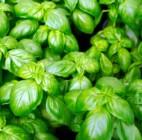
Downy mildew and postharvest chilling damage pose major challenges for sweet basil production. A BARD-supported research team combines breeding and gene-editing approaches to improve disease resistance, reduce cold-induced browning, and preserve the flavor and aroma consumers expect. The project aims to develop more resilient basil varieties for growers and markets.
|
|
|
Unlocking Ancient Wheat Genetics
for Future Crop Resilience
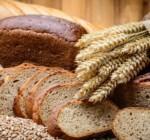
Researchers at the University of Maryland and the University of Haifa are leveraging the genetic diversity of einkorn wheat to identify traits for disease resistance, climate resilience, yield, and grain quality. The findings provide new tools to support the development of improved wheat varieties.
|
|
|
|
|
BARD-funded Graduate Student Fellows present an overview of their research endeavors and key insights
|
|
|
|
Improving Gut Microbiome
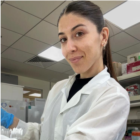
BARD Fellow Carmel Even, a graduate student at the Hebrew University of Jerusalem, conducted research in Dr. Lavanya Reddivari's lab at Purdue University, investigating how dietary components such as prebiotics and plant polyphenols interact with the gut microbiome. Her research advances understanding of nutrition-based approaches that may support health and microbiome function.
|
|
|
|
Plants and Polymer Chemistry
BARD Fellow Talia Khan, a graduate student at MIT, develops lightweight bio-based composites by combining plant and fungi-derived materials with advanced polymer chemistry. Her research explores sustainable alternatives to conventional composites, with potential applications in resource-efficient manufacturing and advanced structural materials.
|
|
|
BARD is a competitive funding program that supports collaborative agricultural research in areas of mutual interest to the U.S. and Israel. BARD, Rishon LeZion 7505101, Israel. We sent out this message to existing BARD contacts. If you no longer wish to receive these emails, simply click on the following link to Unsubscribe.
|
|
|